













 Kids
Kids

Key Takeaways
→ Helmet fines range from Rs. 500 in Mumbai to Rs. 1,000 in Delhi and Hyderabad.
→ Both rider and pillion must wear ISI-certified helmets with fastened chin straps.
→ Repeat offenders face license suspension for up to three months.
→ E-challans can be checked and paid through the Parivahan Sewa portal.
→ A compliant helmet protects you legally and physically.
That Rs. 500 or Rs. 1,000 challan for skipping your helmet? Completely avoidable.
Traffic police across Indian metro cities are cracking down on helmet violations harder than ever. Cameras with automatic number plate recognition, special drives near colleges and metro stations, and hefty fines for repeat offenders make riding without a helmet an expensive gamble.
Whether you commute daily on a scooter or ride occasionally, knowing the exact fines in your city helps you stay prepared. Here is a complete breakdown of helmet rules and penalties across major Indian metros.
What the Law Says About Helmets in India
The Motor Vehicles (Amendment) Act, 2019, governs helmet regulations across the country. According to the Act, the maximum fine for riding without a helmet is Rs. 1,000. Repeat offenders face license disqualification for up to three months.
Each state has the authority to set its own fine amounts within the legal framework, which is why penalties vary from city to city.
Rules that apply uniformly across all states:
- Both rider and pillion passenger must wear helmets
- Helmets must carry the ISI mark (BIS certification)
- Chin straps must be properly fastened
- Open-face helmets are acceptable if they meet safety standards
Wearing a non-certified helmet is legally equivalent to wearing no helmet at all.
Understanding why ISI certification matters helps you make a compliant purchase.
City-Wise Helmet Fines Across Major Metros
|
City |
Fine Amount |
Key Enforcement Areas |
|
Delhi |
Rs. 1,000 |
Metro stations, college zones |
|
Mumbai |
Rs. 500 |
Western Express Highway, Bandra, Andheri |
|
Bangalore |
Rs. 500 + Rs. 100 court fees |
Outer Ring Road, Hosur Road |
|
Chennai |
Rs. 500 |
The ISI mark must be visible |
|
Hyderabad |
Rs. 1,000 |
AI-enabled CCTV detection |
|
Pune |
Rs. 500 |
IT parks, university zones |
Important: Fine amounts are subject to state government revisions. Check your local traffic police website for current rates.
What Happens After You Get a Challan
Getting caught without a helmet triggers a process that goes beyond just paying money.
Immediate consequences:
- E-challan issued on the spot with vehicle registration details
- Payment is required immediately or online within the specified period
- Record created in the traffic violation database
Long-term complications:
- Unpaid challans accumulate and block vehicle registration renewal
- Multiple violations affect your overall driving record
- Some insurance companies review traffic violations when processing claims
- Repeat offenses trigger license suspension (up to three months)
Paying your fine: The Parivahan Sewa portal and state traffic police apps allow online payment. Skip the queue at traffic offices by handling challans digitally.
Myths That Cost Riders Money
"Helmet rules are relaxed inside city limits."
False. Rules apply equally on expressways and neighbourhood lanes. Metro cities use automated surveillance systems that track violations regardless of location.
"Only the person driving needs a helmet."
False. Pillion passengers must wear helmets too. If your pillion is helmetless, you receive the fine as the rider.
"Any helmet works as long as I am wearing one."
False. Non-certified helmets offer no legal protection. Traffic police check for ISI marks, and wearing a non-compliant helmet results in the same fine as wearing nothing.
Picking a Helmet That Keeps You Safe and Legal
Avoiding fines is simple: wear a properly certified helmet every time you ride. But compliance does not mean discomfort. Helmets designed for women fit better and feel lighter than generic options.
What makes a helmet both compliant and comfortable:
- ISI or DOT certification. Mandatory for legal compliance and actual protection.
- Lightweight build. Around 750 grams prevents neck strain during daily commutes. Check out lightweight helmet options for comfortable daily wear.
- Proper fit. A sizing guide ensures your helmet sits snugly without pressure points.
- Secure chin strap. Ratchet-style buckles fasten quickly and stay firm throughout your ride.
- Breathable lining. Anti-microbial, sweat-wicking material keeps you fresh in traffic.
Understanding essential helmet features helps you choose wisely.
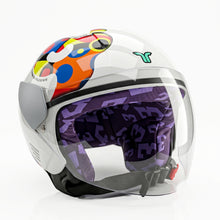
Worth considering: Tvarra helmets weigh 750 grams and carry both ISI and DOT certification. The Lotus, Daisy, and Dreamcatcher collections feature 45-density EPS foam for impact protection, soft cheek pads for comfort, and anti-microbial inner lining for daily wear. Sizes available: Small/Medium (560mm) and Medium/Large (570mm).
Stay Compliant, Ride Confidently
A certified helmet costs less than two challans and protects something far more valuable than your wallet. Choose one that fits well, meets legal standards, and suits your style.
FAQs
What is the helmet fine in Delhi?
Rs. 1,000 for first offense. Repeat violations can lead to license suspension for up to three months.
Do pillion riders need to wear helmets in India?
Yes. Both rider and pillion must wear ISI-certified helmets with fastened chin straps. The rider is fined if the pillion is helmetless.
What type of helmet is legally acceptable in India?
Any helmet with ISI (BIS) or DOT certification. Non-certified helmets are treated as equivalent to no helmet.
How can I pay my helmet challan online?
Use the Parivahan Sewa portal or your state traffic police app to check and pay fines digitally.
Can my license be suspended for not wearing a helmet?
Yes. Repeat offenders face license suspension for up to three months under the Motor Vehicles Act, in addition to fines.